
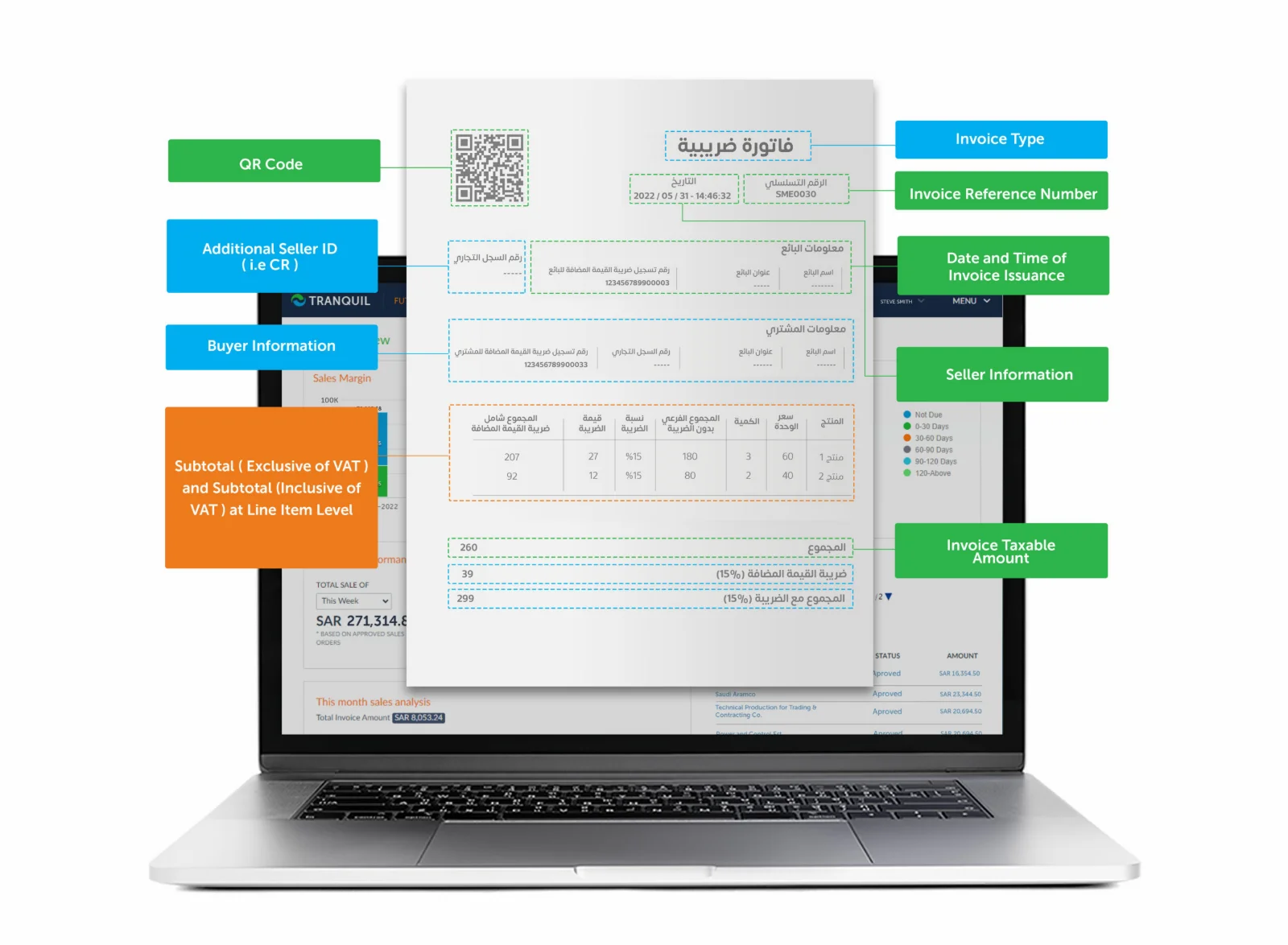
E-invoicing has become a core part of the digital transformation led by the Zakat, Tax and Customs Authority (ZATCA). It aims to increase transparency, reduce tax evasion, and make the economy more efficient, in line with Saudi Vision 2030. This guide covers the implementation phases, the technical requirements, the penalties, and how Tranquil ERP helps you comply.
E-invoicing converts the issuing of paper invoices and notes into a fully electronic process, through an electronic solution that meets ZATCA’s requirements. It covers issuing, storing, and exchanging tax invoices in a structured, machine-readable format (XML, or PDF/A-3 with embedded XML). The goal is a unified, secure digital record of commercial transactions in the Kingdom that is hard to forge or alter.
E-invoicing applies to all VAT-registered taxpayers resident in Saudi Arabia, and to any third party issuing tax invoices on behalf of a VAT-registered supplier. It covers standard tax invoices (B2B) and simplified tax invoices (B2C) issued at the point of sale.
ZATCA has divided e-invoicing in Saudi Arabia into two main phases, giving businesses time to prepare their systems:
Phase 1, known as the Generation phase, requires all VAT-registered taxpayers to:
Phase 1 applies to all resident taxpayers, excluding non-resident taxpayers, and to any party issuing tax invoices on behalf of suppliers subject to VAT.
Phase 2, known as the Integration phase, connects businesses’ e-invoicing systems directly to ZATCA’s FATOORAH platform through an API. Its technical requirements include:
Phase 2 is rolled out in waves based on annual revenue. ZATCA notifies each group of taxpayers at least six months before their deadline, giving them time to choose a compliant system and train their teams.
ZATCA’s guidelines also list functions that a compliant e-invoicing solution must not have:
ZATCA has set penalties for businesses that do not meet e-invoicing requirements. Depending on the type of violation and how often it is repeated, a business may receive a warning or a fine of up to SAR 50,000 per violation. Violations include not issuing or not storing e-invoices, issuing simplified invoices without a QR code, deleting or changing an invoice after issuing it instead of using a credit or debit note, and not informing ZATCA of a technical problem that prevents issuing e-invoices. A compliant ERP system helps you avoid these legal and financial risks.
Tranquil ERP meets the technical requirements of both Phase 1 and Phase 2:
Whether you run a small business or a large company, meeting e-invoicing requirements is now a legal and operational necessity. Request a free demo today, and the Tranquil team will help you prepare your system for full compliance.
Source: ZATCA