Assets
June 11, 2026

From capitalization to disposal — a structural guide for governed assets under IAS 16
Fixed assets are not a year-end accounting line item; they are productive resources that move, depreciate, are maintained, and transferred between locations. When managed in spreadsheets outside ERP, material gaps emerge between the accounting record and physical reality — the company carries assets that no longer exist, or hides assets that are not being depreciated. A fixed-asset ERP binds the full lifecycle from capitalization to disposal to IAS 16 and IAS 36 and integrates a preventive-maintenance layer. This guide sets out the scientific fundamentals, with reference to Tranquil’s asset management solution.
Not every long-lived purchase is an asset. The standard defines clear conditions the system must enforce — not individual judgment.
Company policy sets the minimum amount to treat a purchase as an asset (e.g., SAR 3,000). Below that is a direct expense.
A true asset yields economic benefits across more than one accounting period; otherwise it is an operating expense.
Not necessarily legal ownership — a finance lease (IFRS 16) creates a right-of-use asset treated as one.
Purchase price + fees + installation + testing − trade discounts. Training and subsequent maintenance are expensed.
Every asset is an object composed of financial, technical, location, and maintenance data. ERP unifies them into a single traceable record.
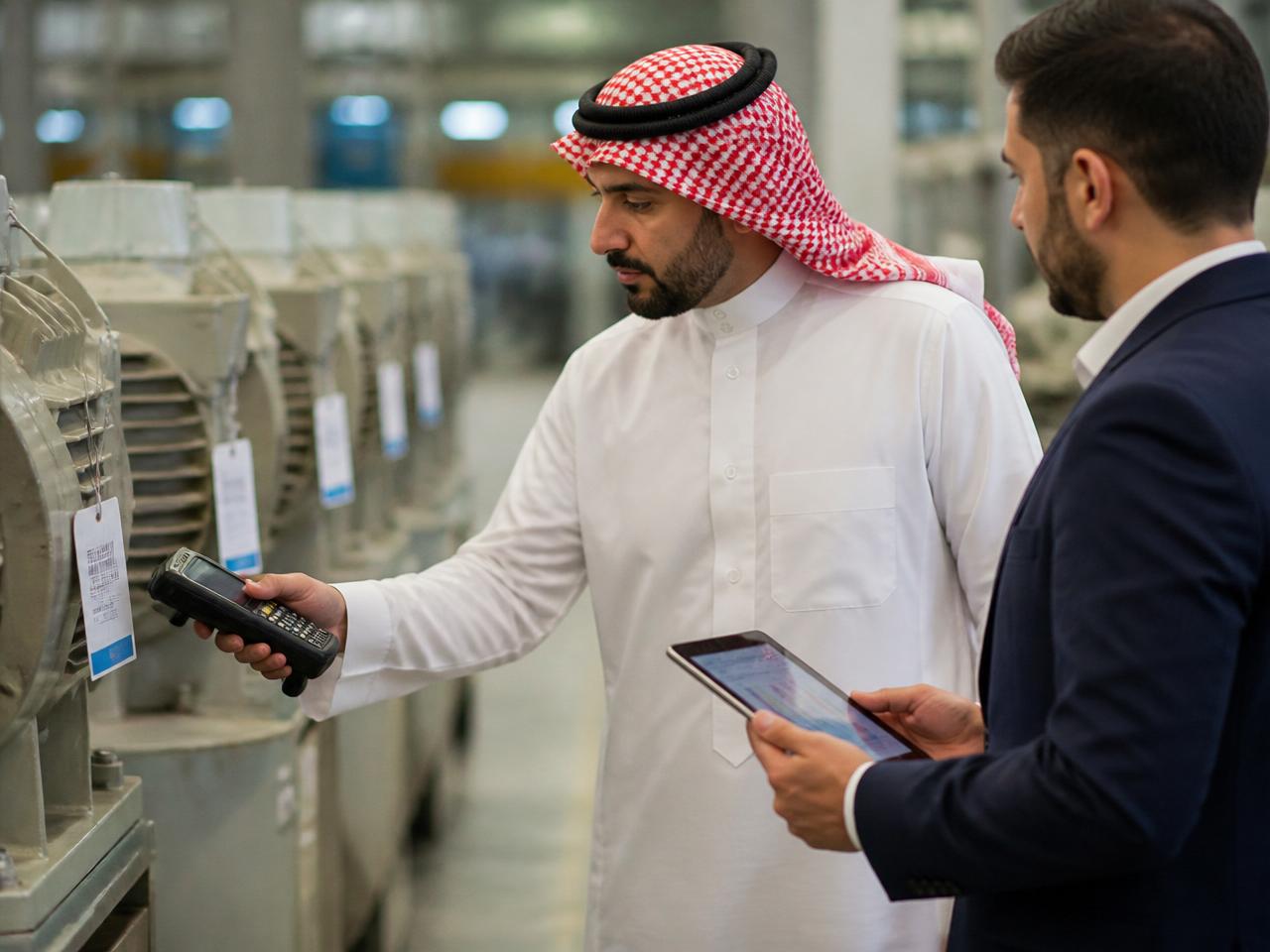
Auto asset number + physical barcode/RFID tag. Enables automated inventory in minutes instead of weeks.
Major class (Machinery) → sub-class (Filling lines) → specific type. Enables depreciation and profitability reports at any level.
Every asset is tied to a physical location and a custodian. Any transfer is documented via a formal transfer order that releases the prior custody.
Invoice, warranty, certificate of origin, operations manual, photos. Central documents end manual search at breakdown or audit.
Choosing a depreciation method is not an accounting luxury; it reflects the consumption pattern of the asset’s economic benefits.
(Cost − residual) / useful life. Most common; suits assets with steady benefit (buildings, furniture).
A fixed percentage on the carrying value. Suits assets that lose value quickly (technology, vehicles).
Depreciation based on actual usage (hours, units produced). More accurate for machines with variable load.
IAS 16 requires annual review. Any change is applied prospectively, not retrospectively.
Carrying value may not reflect the economic reality; the standard requires periodic testing.
The first is simpler and more common. The second (Fair Value) requires periodic independent valuation and affects equity through a revaluation reserve.
On any indicator (damage, market decline, technical obsolescence), carrying value is compared to recoverable amount.
The difference is recognized in P&L, with future depreciation adjusted to the new carrying value.
If the reasons disappear, the impairment is reversed (excluding goodwill), capped at what carrying value would have been without impairment.
An unmaintained asset is a wasted asset. ERP integrates a maintenance schedule that prevents failures before they occur.
Time-based or usage-based schedules. The system auto-creates a work order before the due date with sufficient lead time.
Sensor readings (temperature, vibration) analyzed to determine the actual need for intervention before failure, instead of fixed schedules.
Response to breakdowns. Should be under 20% of total work orders; otherwise the preventive program has failed.
Purchase + install + energy + maintenance + spares + disposal. The system aggregates them for a renew/replace decision.
The gap between records and reality arises from undocumented movements. Governance closes it.
Any transfer between locations or custodians creates an order signed by both parties. No verbal transfer is accepted for accounting purposes.
Annual at minimum, quarterly for critical assets. Barcode/RFID scans are auto-compared to the register and generate a variance report.
Positive variance: a discovered asset is capitalized. Negative: a missing asset is written off after investigation. Both pass management approval.
(Laptops, phones) follow the same protocol. On employee exit: hand back or deduct from final settlement per a documented policy.
End of asset life is an accounting event that must be documented with the same rigor as capitalization.
An entry reverses original cost and accumulated depreciation and records sale proceeds. The difference is a gain/loss on disposal in P&L.
When the asset holds no economic value. A disposal loss is recognized for the full remaining carrying value.
Fair-value treatment with tax considerations (VAT, disposal tax). Purpose must be documented.
Some assets are sold with extended warranty. The system manages resulting obligations as provisions or future liabilities.
An asset dashboard must show both the financial and operational state and integrate leases under the modern standard.
Average of (age consumed) / (total useful life). Rising means a capital renewal plan is needed.
Revenue / total operating assets. A key indicator of capital efficiency.
Annual maintenance cost / carrying value. Above 15-20% signals replacement.
Long operating leases appear as a right-of-use asset and lease liability. The system computes and depreciates them automatically.
Managing assets in Excel outside the accounting books is a guaranteed recipe for painful annual variances and erroneous depreciation. ERP unifies the accounting record with the technical card and the maintenance layer, freeing finance from manual work. To explore a structural solution, see Tranquil for Asset Management and Cloud ERP via the official site.